Should You Hire a Roofer? Signs Your Brooklyn Roof Needs a Professional
How to tell whether your roof needs a roofer now, soon or not yet, what you can safely check yourself, and why roof work on Brooklyn buildings is rarely a DIY job.
Plenty of people call us and ask, half apologizing, “Is this even worth a roofer?” Sometimes the honest answer is no: clear the drain and keep an eye on it. Often it’s yes, and the sooner the better, because roof problems on Brooklyn buildings rarely stay small. This guide is how we’d answer if you called.
Signs Inside Your Home That You Need a Roofer
Most roof problems show up indoors first, usually on the top floor.
- Water stains on the top-floor ceiling, especially brown rings that grow after each rain.
- Stains along a side wall on a rowhouse or brownstone, often from party-wall flashing or the roof next door.
- Stains above the front windows, a common sign of a leaking cornice or front parapet.
- Peeling paint or bubbling plaster near the ceiling.
- Drips around a skylight or water in the stairwell under the bulkhead.
- A musty smell or mold in a top-floor closet or along the ceiling line.
- Daylight or damp wood in the attic of a house with a pitched roof.
Why does my ceiling leak in one spot when the roof looks fine?
Because water rarely drops straight down. On attached Brooklyn buildings it can run along roof boards, joists and party walls for several feet before it shows up. That’s also why a patch on the spot directly above the stain so often fails, and why a roofer should inspect the whole roof.
Signs on a Flat Roof
Most Brooklyn brownstones, rowhouses and walk-ups have flat roofs behind parapets. If you can safely reach yours through a hatch or bulkhead in dry weather, look for:
- Ponding water: water still standing about 48 hours after rain, the common roofing-industry test for ponding.
- Blisters and bubbles in the membrane, a sign of trapped moisture or air.
- Cracking or “alligatoring” on older tar, torch-down or coated roofs.
- Open seams or edges lifting at the walls.
- Clogged drains or scuppers, especially after the fall leaves come down.
- Cracked coping stones or open mortar joints on top of the parapet.
- Soft spots that give underfoot, which usually means wet insulation or rotted boards underneath.
Signs on a Shingle Roof
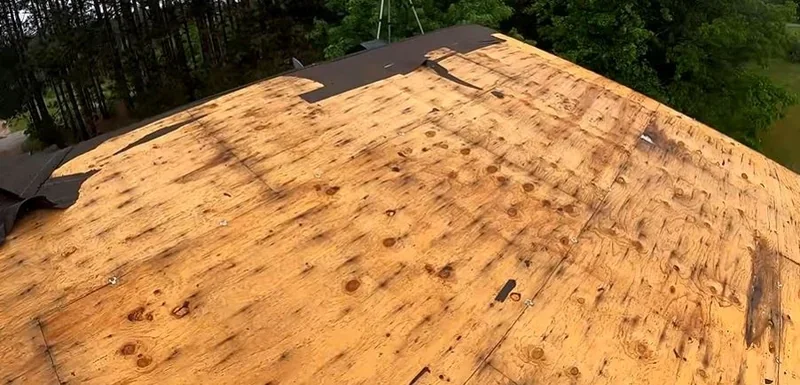
Detached homes in Marine Park, Mill Basin, Dyker Heights, Bay Ridge and the Victorian blocks of Ditmas Park mostly have pitched shingle roofs. From the street, a window or the attic, watch for:
- Missing, cracked or wind-lifted shingles, often after a nor’easter
- Curling or cupping shingles across the roof
- Shingle granules piling up in the gutters
- A sagging ridge or roofline
- Rusted or loose flashing around the chimney and walls
- Moss on shaded slopes under big trees
More on repairing and replacing these roofs on our shingle roofs page.
How Urgent Is It? Now, Soon or Plan Ahead
| What you’re seeing | How urgent | What to do |
|---|---|---|
| Water actively dripping inside | Call now | Catch the water, move valuables, call a roofer |
| Ceiling bulging or sagging with water | Call now | Keep people away; a small hole at the low point with a bucket lets it drain |
| Water near a light fixture or outlet | Call now | Turn off that circuit at the breaker if safe, then call |
| Shingles or roofing torn off in a storm | Call now | Photograph the damage; ask for a tarp or temporary seal |
| New or growing ceiling stain | Within weeks | Book an inspection before the next big storm |
| Blisters, open seams, cracked coping | Within weeks | Get it repaired while it’s still a small job |
| Granules in gutters, aging coating, minor ponding | Plan ahead | Inspection and budget for the next season |
Not sure which row you’re in?
Describe what you’re seeing and a roofer from All State Roofing – Brooklyn will tell you honestly whether it needs a visit.
After a Storm: When to Call a Roofer
Brooklyn has had its share of roof-wrecking weather. Hurricane Sandy in 2012 battered Coney Island, Gerritsen Beach, Red Hook and Sheepshead Bay. When the remnants of Hurricane Ida came through in September 2021, Central Park recorded a record 3.15 inches of rain in one hour, more than many flat roof drains can handle. After a big storm:
- Check top-floor ceilings and walls for new stains.
- Look from the street or a window for missing shingles, lifted edges or debris on the roof.
- Take dated photos of any damage, inside and out.
- Call your roofer before calling a stranger who knocks on your door.
- Call your insurance company if there’s real damage; a roofer’s photos and written report help with the claim.
Will insurance pay for my roof?
It depends on your policy and what caused the damage. Sudden storm damage is often covered; leaks from age, wear and skipped maintenance usually aren’t. Your insurer decides, but good documentation helps either way.
What You Can Safely Do Yourself, and What You Shouldn’t
Fine for most owners
- Check ceilings, walls and the attic after rain
- Look at the roof from the street or a window
- Clear leaves from a drain on a flat roof with safe hatch access, in dry weather
- Keep a record of when and where it leaks
Leave to a roofer
- Walking a pitched roof or working near a parapet edge
- Anything with a torch: NYC requires FDNY-certified roofers and a fire guard
- Smearing mastic or silver paint over a leak you haven’t traced
- Repairs that need a neighbor’s roof, a permit or Landmarks approval
Why is DIY roof work riskier on a Brooklyn building?
Falls are the big one. Federal OSHA rules require fall protection for roofers working six feet or more above a lower level, and most Brooklyn roofs are three or four stories up. On top of that, attached buildings share parapets and flashing with the neighbors, landmarked blocks have rules about what can change, and a well-meant patch often traps water and makes the eventual repair bigger.
Landlords: When a Tenant Reports a Roof Leak
For owner-landlords in Bed-Stuy, Crown Heights, Bushwick and across Brooklyn, a tenant’s leak complaint is more than a nuisance. Tenants can report leaks through 311, and an HPD inspection can lead to a violation. Get the roof looked at quickly, keep records of when the problem was reported and fixed, and fix the cause, not just the ceiling.
Buying or Selling? Get the Roof Inspected
A general home inspector often looks at the roof from a ladder or a window. On an older Brooklyn home, a roofer’s inspection goes further: core cuts on flat roofs to check for wet insulation, a count of how many layers are on the deck, and a look at parapets, coping and flashing. A written report with photos gives buyers real numbers to negotiate with and gives sellers fewer surprises.
What Happens When You Call a Roofer
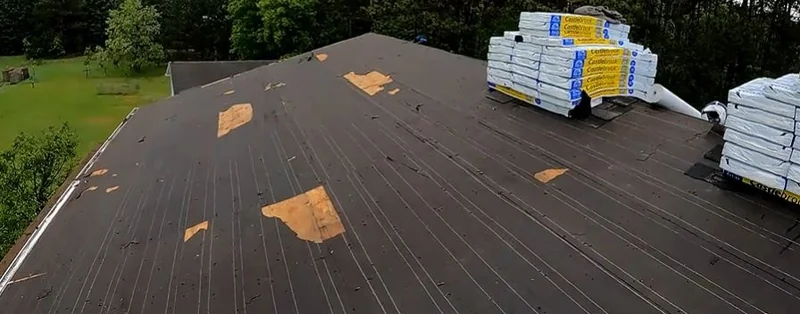
If you call us, here’s what to expect. Other good roofers work much the same way.
- A few questions on the phone: where it leaks, when, what kind of building.
- An inspection of the whole roof, with photos.
- A straight answer: repair, coat or replace, or nothing needed yet.
- A written, line-item quote if work is needed.
- The repair, done to the roof system’s details, and before-and-after photos.
See our roof repair services for the kinds of repairs we handle, and our guide on how to avoid costly roofing repairs for the habits that keep you from needing them.
Brooklyn Conditions That Wear Roofs Out Faster
- Old, attached buildings: close to half of Brooklyn’s homes were built before 1939.
- Freeze-thaw winters that crack coping and mortar.
- Street trees around Prospect Park, Fort Greene and Ditmas Park that clog drains every fall.
- Coastal wind in Coney Island, Brighton Beach, Sheepshead Bay, Gerritsen Beach and Mill Basin.
- Summer heat that bakes dark flat roofs and seams.
Do I Need a Roofer? Common Questions From Brooklyn Owners
How do I know if I need a roofer or can wait?
Call right away for active leaks, a bulging ceiling, water near electrical fixtures or storm damage. Stains, blisters, open seams and cracked coping should be looked at within weeks. Granule loss or an aging coating can be planned for the next season.
What are the first signs of a roof leak?
Usually a brown ring on the top-floor ceiling, peeling paint or bubbling plaster near the ceiling, a musty smell in a top-floor closet, or drips around a skylight.
How long can water sit on a flat roof?
The common roofing-industry guideline is that water still standing about 48 hours after rain counts as ponding, which wears out the roof faster and should be checked by a roofer.
Can I fix my roof myself?
You can safely watch for signs, check ceilings and attics, and clear a drain on a flat roof with safe access in dry weather. Climbing pitched roofs, working near parapet edges, torch work and patching untraced leaks are jobs for a roofer.
Should I call a roofer after every storm?
Not after every storm, but after a major one check your top-floor ceilings and look at the roof from the street or a window. If you see new stains, missing shingles or debris on the roof, call a roofer and take dated photos.
Does homeowners insurance cover roof leaks?
It depends on your policy and the cause. Sudden storm damage is often covered; leaks from age, wear and lack of maintenance usually aren’t. Your insurer makes the call, and photos and a roofer’s report help.
Do I need a roof inspection before buying a house in Brooklyn?
It’s a good idea, especially on older homes. A roofer can check for wet insulation, count the layers on the roof and inspect parapets, coping and flashing in ways a general home inspection often doesn’t.
What should a landlord do when a tenant reports a roof leak?
Act quickly: get the roof inspected, fix the cause and keep records. Tenants can report leaks through 311, and an HPD inspection can lead to a violation.
Do you take emergency roof calls?
Yes. Call All State Roofing – Brooklyn at (929) 695-6095 about active leaks and storm damage.
Seeing One of These Signs? Get Your Roof Checked
All State Roofing – Brooklyn will inspect the roof, show you photos and tell you honestly what it needs, from a simple repair to a new roof, at competitive rates.
All State Roofing – Brooklyn
235 43rd St, Brooklyn, NY 11232
Emergency roof calls taken