How to Avoid Costly Roofing Repairs on Your Brooklyn Home
The habits, checks and small fixes that keep a flat or shingle roof out of emergency territory, written by roofers who see what happens when they’re skipped.
The most expensive calls we get rarely start with a big storm. They start with a drain that was half-blocked for two seasons, or a seam that opened a little more every winter until the insulation underneath was soaked. By the time water shows up on the ceiling, the repair is no longer a seam; it’s a section of roof, the boards under it and the plaster below. Here’s how to stay ahead of that.
Why Small Roof Problems Get Expensive Fast in Brooklyn
- Water travels before it shows. On attached buildings it runs along boards, joists and party walls, so damage spreads long before you see a stain.
- Wet insulation doesn’t dry out. Once insulation under a flat roof is soaked, it usually has to be cut out and replaced.
- Rotted decking adds up board by board. Leaks left for a season or two can turn a membrane repair into a deck repair.
- Interior damage costs more than the roof. Plaster ceilings, crown molding, floors and electrical work in older Brooklyn homes are expensive to put right.
- Neighbors get involved. A leak at a shared parapet can damage the house next door too.
12 Habits That Prevent Costly Roof Repairs
1. Keep drains, scuppers, gutters and leaders clear
This is the cheapest roof maintenance there is, and the one we see skipped most. Leaves from street trees around Prospect Park, Fort Greene and Ditmas Park pile into roof drains every fall. A half-blocked drain is fine in light rain and overflows in a downpour. When the remnants of Hurricane Ida came through in September 2021, Central Park logged a record 3.15 inches of rain in one hour. A flat roof with clogged drains can’t shed water like that.
- Clear drain strainers and scuppers in late fall and again in spring.
- Make sure leaders (downspouts) aren’t crushed, disconnected or dumping water against the foundation.
- Keep drain strainers in place; without them, debris goes down the pipe and clogs it lower down.
2. Get the roof inspected twice a year and after big storms
Spring catches what winter did: frozen-and-thawed mortar, opened seams, lifted shingles. Fall gets the roof ready for leaves, snow and nor’easters. After a major storm, at least check the top-floor ceilings and look at the roof from a window or the street. A professional inspection should cover the surface, seams, flashing, parapets, coping, drains, skylights, hatches and anything mounted on the roof, with photos.
3. Watch the flashing and sealants
Flashing is the metal and membrane that seals the roof to walls, chimneys, skylights and pipes, and it’s where most Brooklyn leaks begin. Sealants at counterflashing, termination bars, pitch pockets and pipe boots dry out and crack with sun and cold. They’re maintenance items, not lifetime parts. Resealing them early is a small job; ignoring them can mean a wall full of water.
4. Look after parapets and coping
Brownstones, limestones and walk-ups have parapet walls with stone or metal coping on top. Freeze-thaw winters crack the coping and open mortar joints, and water runs straight into the wall below. Many NYC buildings with parapets facing a street or sidewalk also need a yearly parapet observation under a Department of Buildings rule, which is a good time to catch cracks before they leak.
5. Fix open seams and blisters while they’re small
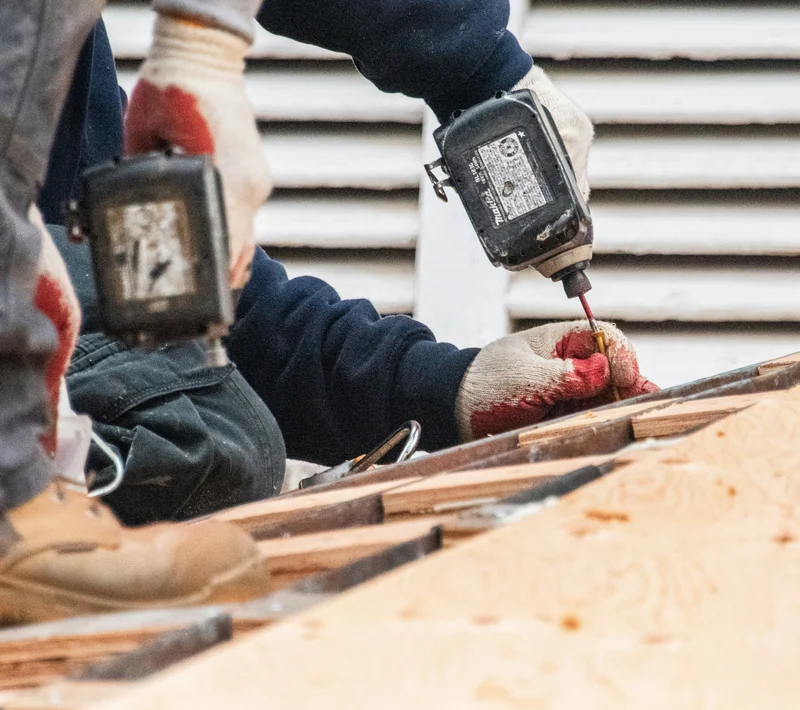
On EPDM, TPO, PVC and modified bitumen roofs, an open seam or a blister with a crack in it is a direct path for water. Caught early, it’s a patch or a reseal. Left alone, water gets into the insulation and the repair grows.
6. Don’t let water sit on a flat roof
Water still standing about 48 hours after rain is what roofers call ponding. It speeds up wear, adds weight and finds every weak seam. Sometimes it’s a clogged drain; sometimes the roof has sagged or was never pitched properly. When a flat roof is replaced, tapered insulation and crickets can be built in to move water to the drains.
7. Keep foot traffic and equipment off the roof surface
Every person who walks a roof is a chance for damage: the cable installer, the AC tech, the tenant who likes the view. Ask service people to stay on walkway pads or a defined path, keep tools and materials off the membrane, and never let anyone shovel a flat roof with a metal shovel.
8. Be careful with what gets mounted on the roof
AC units, satellite dishes, antennas and solar panels all mean fasteners or penetrations through the roof. Each one needs proper flashing, and a lot of the leaks we trace start at a bracket someone screwed down years ago. If you’re adding solar, have the roof checked first; there’s no point putting panels on a roof that needs replacing in a few years.
9. Ventilate the attic under a shingle roof
On detached houses in Marine Park, Dyker Heights and Midwood, a poorly vented attic bakes shingles from below in summer and helps ice form at the eaves in winter. Balanced intake at the soffits and exhaust at the ridge keeps the roof deck cooler and drier.
10. Trim branches over the roof
Overhanging limbs scrape shingles, drop leaves into valleys and gutters, and keep shaded slopes damp enough for moss. Keeping branches back from the roof is cheaper than any of those repairs.
11. Don’t patch over patches or coat a wet roof
Mastic on a seam, silver paint over a leak, another layer on top of an old roof: each one feels cheaper today and costs more later. A coating over wet insulation traps the water. Building codes don’t allow a new roof over two or more existing layers anyway, and every extra layer hides rot and adds weight.
12. Keep records and photos
Write down when and where it leaked, what was done and who did it. Dated photos and repair records help the next roofer diagnose faster, help with insurance claims, and are useful when you sell.
Want a roof checkup before winter?
All State Roofing – Brooklyn inspects the whole roof, photographs what we find and tells you what can wait and what can’t.
Small Fix Now vs Big Repair Later
| Small problem | Quick fix now | What it becomes if ignored |
|---|---|---|
| Leaves in the roof drain | Clear the drain and strainer | Ponding, overflow at flashing, top-floor leak |
| Cracked coping joint | Repoint or reseal the joint | Water in the wall, damaged plaster, parapet repair |
| Small open seam | Clean and reseal the seam | Wet insulation and a section of roof replaced |
| Dried-out pipe boot | Replace the boot | Leak down the pipe chase into the wall |
| Loose counterflashing | Reset and seal | Water behind the flashing and into the wall |
| A few missing shingles | Replace and seal the shingles | Wet decking, rot and a bigger shingle repair |
| Soft spot on a flat roof | Core check and repair the wet area | Rotted boards and a larger tear-off |
Roof Maintenance Checklist by Roof Type
Flat roofs
- Drains, scuppers and strainers clear
- No water standing two days after rain
- Seams tight, no blisters or cracks
- Coping and parapet joints sealed
- Flashing at walls, bulkhead and skylights intact
- Coating in good shape on coated roofs
Shingle roofs
- No missing, lifted or curling shingles
- Gutters clear, few granules in them
- Chimney and wall flashing tight
- Pipe boots not cracked
- Attic dry, vents unblocked
- Branches trimmed back
For pitched-roof homes, our shingle roofs page explains what a well-built shingle roof includes.
When Repairs Stop Being the Cheaper Option
Maintenance and repairs save money up to a point. Past it, you’re paying for the next leak. It’s usually time to think about replacement when:
- The roof leaks in several places, or the same spot keeps failing after repairs.
- Test cuts show wet insulation across a large area.
- The roof is soft underfoot or the deck is rotting.
- There are already two or more roofs stacked on the deck.
- Shingles are curling and shedding granules across the whole roof.
A good roofer will tell you which side of that line you’re on. If you’re not sure, read signs your roof needs a professional.
For Landlords, Co-ops and Building Managers
On rental buildings, a roof leak isn’t just a repair; it’s a tenant complaint. Tenants can report leaks through 311, and an HPD inspection can lead to a violation. A simple maintenance plan, with drain cleaning and inspections in spring and fall plus a written report each time, catches most problems before tenants ever see them and gives boards and owners a paper trail for budgeting.
Is it safe to do roof maintenance myself?
Clearing a drain on a flat roof you can reach safely through a hatch, in dry weather and away from the edge, is fine for most owners. Walking a pitched roof, working near parapet edges, or anything involving a torch is not. Federal OSHA rules require fall protection for roofers working six feet or more above a lower level for good reason.
Roof Maintenance and Repair Costs: FAQs
How often should a roof be inspected in Brooklyn?
Twice a year, in spring and fall, and after major storms. Spring catches winter freeze-thaw damage; fall gets drains and flashing ready for leaves, snow and nor’easters.
What is the most common cause of expensive roof repairs?
Small problems left too long, especially clogged drains, failed flashing and open seams. Water gets into the insulation and decking, and the repair grows from a patch to a section of roof.
How long can water stand on a flat roof?
The common roofing-industry guideline is that water still standing about 48 hours after rain counts as ponding. It wears the roof faster and should be looked at.
Is roof coating a good way to avoid repairs?
On a roof that’s sound and dry, with seams and flashing repaired first, a coating can extend its life. On a wet or failing roof, a coating traps moisture and usually leads to a bigger repair.
Can I clean my own roof drains?
If you can reach a flat roof safely through a hatch, in dry weather and away from the edge, clearing leaves from a drain strainer is fine. Leave pitched roofs, edges and anything involving a torch to a roofer.
When is it cheaper to replace a roof than keep repairing it?
When it leaks in several places, the same spot keeps failing, insulation is wet across a large area, the deck is soft, or there are already two or more roofs stacked on it.
Do AC units and solar panels cause roof leaks?
They can, at the brackets and penetrations that hold them down. Each one needs proper flashing, and the roof should be checked before solar goes on.
Do you offer roof inspections and maintenance in Brooklyn?
Yes. All State Roofing – Brooklyn inspects roofs with photos and a written report and handles the repairs. Call (929) 695-6095.
Catch the Small Roof Problems Before They Get Expensive
Call All State Roofing – Brooklyn for a roof inspection with photos and a written report, and fix the little things while they’re still little.
All State Roofing – Brooklyn
235 43rd St, Brooklyn, NY 11232
Emergency roof calls taken